Mentoring Programme
If you would like to apply for a fellowship at the Institute of Neurosciences, please, get in contact with any of our researchers and ask them if they are willing to give you support.
Steps to Apply for a Fellowship at the Institute of Neurosciences
1. Identify and Contact a Mentor
Reach out to any of our researchers and inquire if they are willing to support your fellowship application. Below, you will find a list of researchers related to the specific fellowship you are interested in.
2. Confidentiality Commitment
All mentors have signed a Confidentiality Agreement, committing to keep the content of documents, comments, and exchanges confidential, as well as the identities of the candidate and supervisor.
3. Obtain Agreement
Once a researcher agrees to mentor you, send them the confidential agreement signed by you and your supervisor. Please cc: cristina.pulido@ub.edu on this email.
4. Submission Timeline
Generally, mentors require the “proposal” to be submitted two weeks in advance for proper support. However, it is advisable to contact your mentor to discuss and arrange the specific details of the process.
PhD Candidates

Doctoral INPhINIT fellowships offer a highly competitive salary and complementary opportunities for training in transferable skills throughresidential sessions, outreach activities, incentive upon completion of the thesis and other features that make these fellowships among the most attractive and comprehensive in Europe.
Incoming: For international researchers who wish to carry out their doctoral project at a Spanish research centre accredited with the Spanish Seal of Excellence María de Maeztu (such as us, UBneuro) or Severo Ochoa.
Retaining: For researchers who want to carry out their doctoral project in any field of research at any university or research centre in Spain or Portugal.

Ignacio Roura
RETAINING
Structural and functional brain patterns associated with different cognitive phenotypes in REM behavior disorder. ignacio.roura@ub.edu

Stella Nicolau
RETAINING
Neural correlates of social reward in Borderline Personality Disorder. stella_nicolaou@ub.edu

Marcos Galán
RETAINING
Study of molecular alterations in schizophrenia using translational models at Hippocampal function in health and disease. marcosgalan@ub.edu

Rachel Morse
INCOMING
Factors influencing risk and resilience in aging and dementia prevention. rmorse@ub.edu

Bianca Franzoia
INCOMING
Impact of speech rhythm on the acquisition of grammar. bianca.franzoia@ub.edu
Postdoctoral Researchers

Melike Kucukerden – Marie Skłodowska-Curie Actions
Monitoring and modulation of brain circuits in neurodegenerative disorders. kucukerden@ub.edu

Marta Matamala – Beatriu de Pinós & Marie Skłodowska-Curie Actions
Movement sonification and multisensory integration. marta.matamala@ub.edu

Olga Laporta-Hoyos– Marie Skłodowska-Curie Actions
Neuropsychology of neurodevelopmental disorders olgalaporta@ub.edu
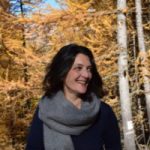
Ana Zappa – Marie Skłodowska-Curie Actions
Brain correlates of socially interactive second language learning. anazappa@gmail.com

Dina Popovic – Marie Skłodowska-Curie Actions
Bipolar disorders. popovic.dina@ub.edu

Samira Rostami – Marie Skłodowska-Curie Actions
Exercise-based interventions and mental health in young adults. samirarostami@ub.edu

Jordi Abante – “la Caixa” Junior Leader
An Artificial intelligence approach for neurodegenerative diseases. jordi.abante@ub.edu

Beatrice Borsari – Beatriu de Pinós & “la Caixa” Junior Leader
Multi-omics data analysis of neurodevelopmental disorders. beatrice.borsari@ub.edu

Serena Sabatini – “la Caixa” Junior Leader
Improving Self-Perceptions of Aging in Older Adult Couples. serenasabatini@ub.edu

Konstantina Zacharaki – Juan de la Cierva
Neural basis of statistical learning and its role in language acquisition. k.zacharaki@ub.edu
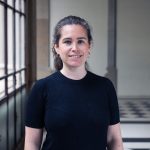
Cristina de la Malla – Beatriu de Pinós & Juan de la Cierva
Eye movements, Sensori-motor decision-making, Perception and action. c.delamalla@ub.edu

Oriol Ros Torres – Beatriu de Pinós
Axon Guidance, Brain Connectivity, Membrane Dynamics. oriol.ros@ub.edu